
In food manufacturing, weighing equipment supports a range of everyday tasks, from portion control and ingredient measurement to quality checks and dispatch. When a scale becomes unreliable or breaks down, production can be disrupted and teams may need to investigate whether product, process or quality records are affected.
A planned maintenance framework helps you manage that risk. It combines routine checks, scheduled servicing, calibration, clear records and a reliable repair route. It also helps your team spot changes early, before they become an avoidable interruption.
At Hub & Spoke, we provide tiered preventative maintenance plans for weighing equipment, alongside servicing, repairs, refurbishment and calibration. Our plans are called Emerald, Ruby, Diamond and Platinum. Here is a practical framework to help you decide what your site needs.
1. Know which equipment matters most
Start with a simple register of your weighing equipment. Include bench and floor scales, checkweighers, platform scales and other units used in production or quality control.
For each unit, record:
- Its asset number, location, make and model
- What process or product it supports
- Its capacity and normal working range
- When it was last serviced or calibrated
- The person or team responsible for reporting problems
- Any recurring faults or repairs
This helps you understand where a problem could have the greatest effect. For example, a scale used to weigh ingredients for a formulation may need closer attention than a unit used for a non-critical internal task. Set practical acceptance limits for each application with your quality team, and make sure operators know what to do if readings are unstable or outside those limits.
A register also makes it easier to plan servicing around production schedules and keep service records together.
2. Set clear operator checks
Operator checks are not a replacement for professional servicing or calibration. They are a simple way to catch visible problems early.
Before use, or at a frequency that suits the process, your team can check that:
- The scale is clean and free from product build-up
- The platform is stable, level and clear of obstructions
- The display starts correctly and returns to zero
- Readings settle consistently when a known load is applied
- Cables, feet, seals and visible components appear undamaged
- There are no unusual error messages, drift or changes in performance
For equipment used in washdown areas, follow the manufacturer’s cleaning instructions. Protect components that are not designed for direct water or chemical exposure, and allow equipment to dry and stabilise before checks where required. If an operator notices a concern, record it and report it promptly rather than continuing to use the scale without assessment.
3. Use servicing to prevent avoidable failures
A planned service gives an experienced engineer the opportunity to inspect equipment and identify wear, damage or performance issues that may not be obvious during a routine operator check.
The right service interval depends on the equipment, how frequently it is used, its environment and its history. A scale operating continuously in a wet or demanding production area may need a different service schedule from a unit used occasionally in a controlled environment. Use manufacturer guidance and your own maintenance records to agree a suitable plan.
A service may include inspection, testing, cleaning, adjustments and replacement of worn parts where needed. The exact work depends on the make, model and condition of the equipment. If a unit needs repair, diagnosing the cause matters: replacing a component or adjusting a scale should not be used to conceal a mechanical or installation problem.
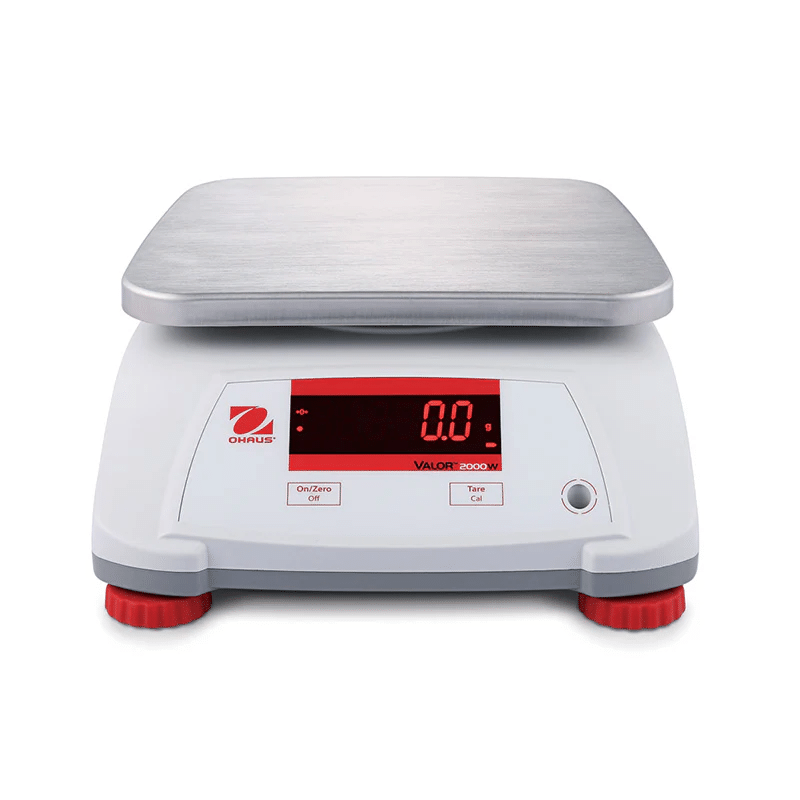
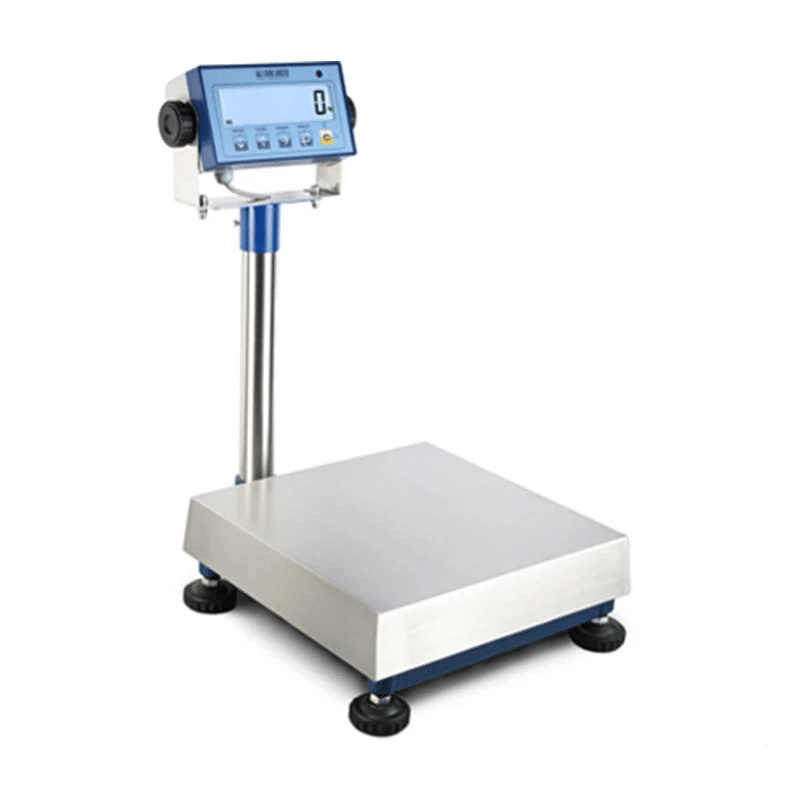
Hub & Spoke provides maintenance and repair support for all makes and models, including OHAUS, Dini Argeo, Adam Equipment and Giropes. We can service equipment supplied by us or another supplier, and work onsite or offsite where suitable.
4. Treat calibration and verification as planned controls
Calibration compares a measuring instrument’s readings with a known standard under defined conditions. Verification checks whether the equipment meets the acceptance limits you have set for its intended use. Both help you understand whether a scale is performing as required.
Your calibration programme should identify the equipment to be checked, the interval, the acceptance criteria and what happens if a unit does not pass. Calibration may also be needed after a repair, relocation, overload or other event that could affect performance. Your quality team can decide how these checks fit into your site procedures and records.
Hub & Spoke carries out calibration under an ISO 9001:2015 quality system, using test weights traceable to ISO/IEC 17025:2017. We can provide calibration certificates for your records. Every unit we repair is returned fully calibrated, with a calibration certificate available as an option.
For general background on maintenance programmes and the difference between calibration and verification, see Equipment Maintenance and Calibration from Manitoba Agriculture.
5. Make the response to a fault clear
Even with regular maintenance, equipment can need repair. A clear fault process helps your team act consistently.
When a scale appears to be faulty:
- Stop and assess. Follow your site procedure if readings are unstable or outside approved limits.
- Record the issue. Note the asset, location, symptoms and when the issue started.
- Escalate promptly. Contact your maintenance provider and share the information available.
- Consider operational impact. Your quality and production teams can assess any product or process affected since the last acceptable check.
- Return to service only when appropriate. Confirm the repair and required checks have been completed before relying on the equipment again.
A slow repair process can add pressure to an already busy production team. Hub & Spoke aims for a fast turnaround and can provide loan units to help avoid interruption where available and suitable. Our service centre holds a wide range of spare parts, with additional components sourced overnight when needed. We also offer free repair quotations so you can review the options before deciding how to proceed.
6. Keep records that help you improve the plan
Good records support internal reviews, audits and day-to-day decisions. For each service or calibration, retain the equipment identification, date, work completed, results, parts replaced and any action taken. Keep certificates and relevant service reports alongside the asset history.
Review those records periodically. Repeated faults, frequent adjustments or changes in performance may indicate that an interval, operating practice or equipment choice needs attention. A maintenance plan should be reviewed as your production volumes, processes and equipment change.
Choose a plan that fits your site
Hub & Spoke’s Emerald, Ruby, Diamond and Platinum preventative maintenance plans offer a tiered approach. All include the basics, with faster response times and additional benefits at higher levels. We can help you consider the number and type of scales you use, where they operate, how critical they are to production and the level of support you need.
Maintenance customers also receive discounts on new products and spare parts. We cover customers across the UK with experienced engineers, and we support weighing equipment throughout its working life: from servicing and repairs to refurbishment, including Bizerba refurbishment.
A preventative maintenance framework does not need to be complicated. Start with an equipment register, clear operator checks, planned servicing, suitable calibration intervals and a reliable route for repairs. Then review the records and adjust the plan as your requirements change.
To discuss the right level of support for your equipment, visit our repairs, servicing, refurbishment and calibration page, call 0121 724 0885, or request more information.